Small Cooler Bag Buying Guide: Fit the Food and the Cold Sources
A cooler bag needs room for more than a lunch container. Choose its usable shape, closure and cleaning arrangement around food plus suitable cold sources, and keep food safety separate from unqualified claims about insulation duration.
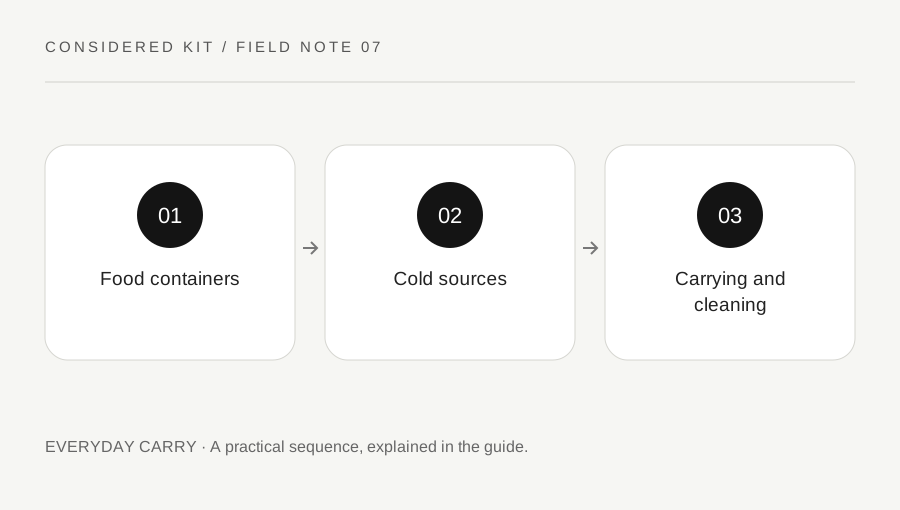
Original explanatory diagram. Examples illustrate a method or decision; they are not claims of personal testing.
Pack the actual containers on paper
List the foods and containers for one ordinary outing. Note which containers must remain upright and which can stack. Measure the largest box including its lid, clips and handles. Compare those dimensions with the usable interior of a candidate bag rather than the outside measurements or a picture of several drinks.
For an illustrative lunch, a rigid box, a yoghurt container and two cold packs may need more depth than a slim tote provides. Draw their arrangement and leave enough access to close the bag without crushing food. Capacity measured in cans is not a reliable description of how your different-shaped containers will fit.
Include the cooling method in the purchase
Read current food safety guidance for the foods and trip. USDA advises keeping perishable foods appropriately cold and using suitable cold sources with an insulated container. Insulation slows heat transfer; it does not create cold by itself. Do not budget every cubic centimetre for food and then discover that the necessary packs have nowhere to go.
Check whether the manufacturer’s interior measurements include bulky lining or built-in compartments. A removable pack or bottle should fit without forcing the zipper. For longer or uncertain journeys, consider how you will verify conditions and where refrigeration is available. A product description claiming many hours of cooling needs its test conditions before it can inform a specific plan.
Think about access during the outing
Count how often the bag will be opened. A shared snack bag used repeatedly is a different situation from a single lunch carried directly to work. Arrange frequently accessed shelf-stable items separately when practical so that opening the main chilled compartment is purposeful. This is a packing decision as well as a buying feature.
Check whether the top opens far enough to remove a box without tipping everything else. A narrow opening can be inconvenient even with adequate interior volume. Decide whether carrying handles, a shoulder strap or a backpack form suits the route, then include the weight of food and cooling packs in that decision. A light empty bag is only part of the carried load.
Inspect cleaning and leakage claims
Look for accessible seams, removable inserts if present and the exact care instructions. A wipe-clean lining may simplify ordinary cleanup, but a liner is not automatically watertight. Distinguish a maker claim of leak resistance from permission to carry loose liquid or melting ice. Use closed food containers and the cooling arrangement the bag supports.
Consider what happens after a spill. Can you see and clean the corners, and can the whole interior dry before storage? Do not assume machine washing is safe because the outside resembles a fabric shopping bag. Check whether straps or a rigid base limit cleaning. The most practical option is one you can maintain consistently between uses.
Make a trip-specific decision and recheck it
Write a purchase requirement such as one upright lunch box, two specified packs, an accessible closure and a cleanable interior. Compare candidates against those points before comparing decorative features. Keep return packaging while performing a clean dry fit check with empty containers and packs, following the seller conditions.
After purchase, prepare food and cooling sources according to current authoritative guidance and the product instructions. Weather, starting temperature, time and openings vary, so do not treat an earlier successful trip as a permanent guarantee. If the outing requirements outgrow the small bag, change the arrangement instead of removing cooling sources simply to force more food into it.
A practical checklist
Choices are saved in this browser. Reset them here or clear this site’s browser storage.
Questions that come up
Will an insulated bag cool warm food?
It should not be treated as a cooling appliance. Prepare and transport foods according to current food safety guidance and the intended equipment.
Can I rely on a stated cooling time?
Only with a clear understanding of the manufacturer’s test conditions and your own trip. Opening frequency, temperature and cold sources can differ.
Can I put loose ice in any cooler bag?
No. Check whether the exact bag supports that use and whether its lining and closure contain water as claimed.
References & scope
Background references checked on 18 October 2026. Worked examples and diagrams are original teaching material.