Everyday Tote Buying Guide: Opening, Handle Drop and a Realistic Load
A tote can have plenty of volume while being inconvenient to carry or search. Compare the opening, handles and organisation around a normal load, then choose the smallest arrangement that works without forcing objects together.
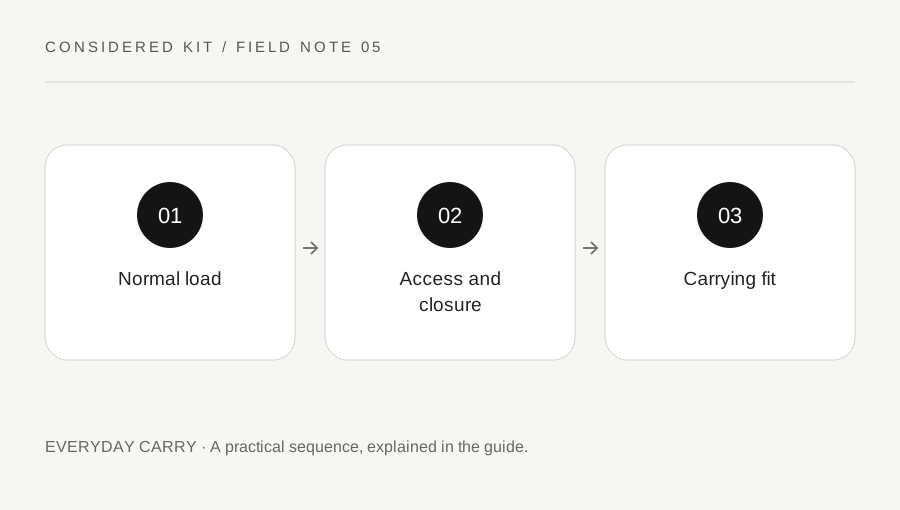
Original explanatory diagram. Examples illustrate a method or decision; they are not claims of personal testing.
Build the everyday load first
Put the objects you carry on an ordinary day together: perhaps a lunch container, bottle, notebook, small pouch and folded layer. Separate occasional extras from daily essentials. The aim is to compare a real arrangement rather than buying capacity for every imagined future errand. Measure the largest rigid item in its normal orientation.
Try placing the objects inside an existing bag or a paper outline of a proposed base. In an illustrative work load, a rectangular lunch box may determine the required base depth even when the notebook determines height. Litres alone will not show that conflict. Also consider the empty bag weight; it becomes part of every load before anything useful is added.
Check the opening as well as the base
A wide-looking tote can narrow near a zipper or handles. Read dimensions and product diagrams, then check whether the largest object can pass through the opening without tilting a drink or bending papers. Base width, upper width and depth are different measurements. Manufacturer size options should be compared individually rather than assumed to share one shape.
Think about opening the bag when seated or standing in a queue. A full zipper can help contain items, while an open top can make access simpler; either choice has tradeoffs. A tote is not a secure storage system just because it has a closure. Keep valuables according to the situation and avoid leaving important items visible in an unattended bag.
Understand handle drop and layers
Handle drop describes the distance between the top of the bag and the top of the handle in its carrying position; do not confuse it with the total length of the strap. Check the maker diagram when wording is unclear. A handle that fits over a light shirt may be awkward over a winter coat.
Where possible, try the candidate with the clothing and representative load you expect to use. Walk a short distance and change between hand and shoulder carrying. Notice whether the bag hits your leg or slides when you reach for something. Do not infer comfortable carrying from a very high material strength claim. A bag can hold more than you would sensibly want to carry.
Choose a small organisation system
List the items you need to find without unloading the bag: keys, transport pass, glasses or a phone. Match those to accessible pockets or a removable pouch. Too many narrow pockets can be as inconvenient as one large compartment when none fits your objects. Check whether a bottle location keeps it away from documents and electronics.
A removable pouch can transfer essentials to another bag, but it also occupies space and adds a separate object to manage. If a laptop is part of the load, verify the exact padded compartment fit or a compatible separate sleeve. A generic tote wall and a soft lining do not establish the same protection as a specifically designed laptop compartment.
Check care, structure and the return decision
Read the material care instructions and whether the bag stands on its own or collapses when empty. A rigid base can make packing predictable but may be less convenient to store. Light fabric may fold well but give little structure to a mixed load. Neither characteristic is automatically a quality ranking.
Before keeping a purchase, perform a clean indoor packing check allowed by the return policy. Close it with the normal contents, lift it by the intended handles and remove the object you need most often. Record the one limitation you accepted, such as using a pouch for small items. A clear compromise is more useful than assuming an everyday tote can perform every luggage task.
A practical checklist
Choices are saved in this browser. Reset them here or clear this site’s browser storage.
Questions that come up
Does a larger capacity mean easier packing?
No. Shape, opening and the dimensions of rigid objects can matter more than the volume number.
Should I buy a tote with many pockets?
Choose pockets that fit specific objects you need to reach. A simple removable pouch may suit another load better.
Can a tote replace a laptop sleeve?
Only a supported protective compartment or another suitable arrangement can answer that need. Do not assume ordinary fabric provides equivalent protection.
References & scope
Background references checked on 18 October 2026. Worked examples and diagrams are original teaching material.