Compact Umbrella Buying Guide: Packed Length, Grip and Drying Space
The most useful umbrella is one you can carry, operate and dry after the journey. Compare a few ordinary situations before choosing a miniature model or a large canopy, and read weather claims with their stated conditions.
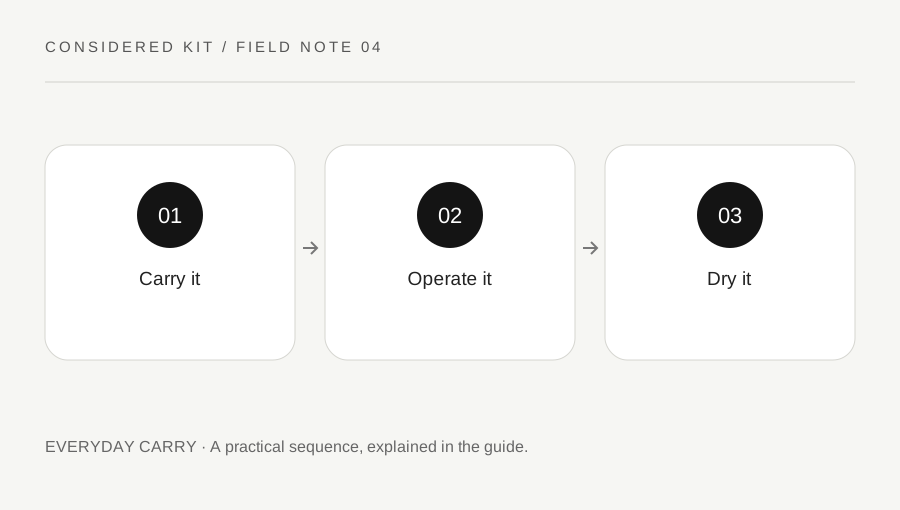
Original explanatory diagram. Examples illustrate a method or decision; they are not claims of personal testing.
Start with the route and the packed object
Write down where the umbrella will live: a bag pocket, a coat pocket or beside a door. Measure that space with the normal contents present. Folded length and handle shape can matter more than a broad lightweight claim. A compact cylinder that pushes against your laptop or cannot be removed easily may stay at home.
Consider the actual route. A short walk from a station and a long exposed path create different priorities. For an illustrative commuter with a narrow bag pocket, compare the packed length against the pocket opening and depth, then check whether the wet umbrella will need a separate sleeve on the return journey. Avoid choosing solely from a canopy photograph.
Read canopy measurements carefully
Check how the maker defines its stated size. A canopy measurement may describe an arc or another product dimension rather than the usable horizontal width you imagined. Look for a diagram and compare candidates using the same measurement. Coverage also depends on how you hold the umbrella, the angle of rain and the bag carried beside you.
Make a simple requirement such as protecting one person and a small shoulder bag during a short urban walk. That is clearer than searching for maximum coverage without considering packed bulk. A larger umbrella also needs more space around other pedestrians. No ordinary umbrella removes the need to choose an appropriate route when conditions become severe.
Try the opening and closing sequence
Read the instructions for the exact mechanism. Manual, automatic-open and automatic-open-and-close designs do not all operate alike. Check whether you can hold the grip securely, locate the button and complete the folding sequence with your usual bag in the other hand. Some mechanisms still need a separate physical reset after the canopy closes.
In a shop, ask before opening the umbrella and leave clear space around people and displays. Do not point a spring-loaded mechanism toward someone. Notice whether the handle becomes difficult to control with a light grip. An operation that looks effortless in an advertisement may not suit your hands or the crowded entrance where you normally use it.
Treat wind claims as bounded information
Look for the maker’s explanation of wind resistance, repair and warranty rather than equating a strong adjective with guaranteed survival. Test conditions and exclusions matter. A claim about a frame does not make an umbrella shelter from dangerous weather or ensure that it will remain controllable in every gust.
Inspect whether the product can be maintained as instructed and whether the maker offers a clear route for damaged parts. Do not deliberately invert a display umbrella to imitate a test. If a canopy inverts in ordinary use, follow the manufacturer’s recovery instructions rather than forcing ribs back into place. Damage to joints or fabric can make the next use less reliable.
Plan the wet stage before buying
Check the sleeve opening and where water can drain without reaching electronics or other belongings. A waterproof pouch can contain a wet umbrella during a short transfer, but it does not replace drying. BLUNT and totes publish care guidance; follow the instructions for the chosen product rather than leaving it tightly wrapped after every shower.
Identify a suitable drying place at home and, if relevant, at work. An open umbrella occupies more floor space than its folded dimensions suggest, so keep it clear of walkways. Check permitted cleaning methods and store it only after it is dry. A slightly larger umbrella that fits this whole routine may be more useful than a tiny one that is awkward to handle and maintain.
A practical checklist
Choices are saved in this browser. Reset them here or clear this site’s browser storage.
Questions that come up
Is the smallest umbrella the best travel option?
Only if the grip, coverage and operation suit the trip. Packed size is one requirement among several.
Does wind resistant mean storm safe?
No. Read the exact claim and use current weather guidance and common sense about exposed routes.
Can I leave it wet in its sleeve?
Use the sleeve for temporary transport as appropriate, then follow the maker drying instructions before storage.
References & scope
Background references checked on 18 October 2026. Worked examples and diagrams are original teaching material.